Newcastle Beach · Bellevue, WA · Coal Creek Trail
——纽卡斯尔海滩旁那条从煤矿铁路走来的小径
— The trail beside Newcastle Beach that grew from a century-old coal railway
如果你在某个西雅图东岸的午后,沿着 Coal Creek Parkway 向南开,会在一片不起眼的路口看到一块指示牌,上面写着"Newcastle Beach Park"。
On a quiet afternoon along the eastern shore of Seattle, drive south on Coal Creek Parkway and you'll spot an unassuming sign: "Newcastle Beach Park."
停车场不大,几棵高大的花旗松把阳光切成碎片,洒在湖面上。华盛顿湖在这里安静得像一面镜子,对岸是西雅图的天际线,远得像一幅画。
The parking lot is modest. Tall Douglas firs slice the afternoon light into shards that scatter across the water. Lake Washington lies still as a mirror here, Seattle's skyline a faint watercolor on the far shore.
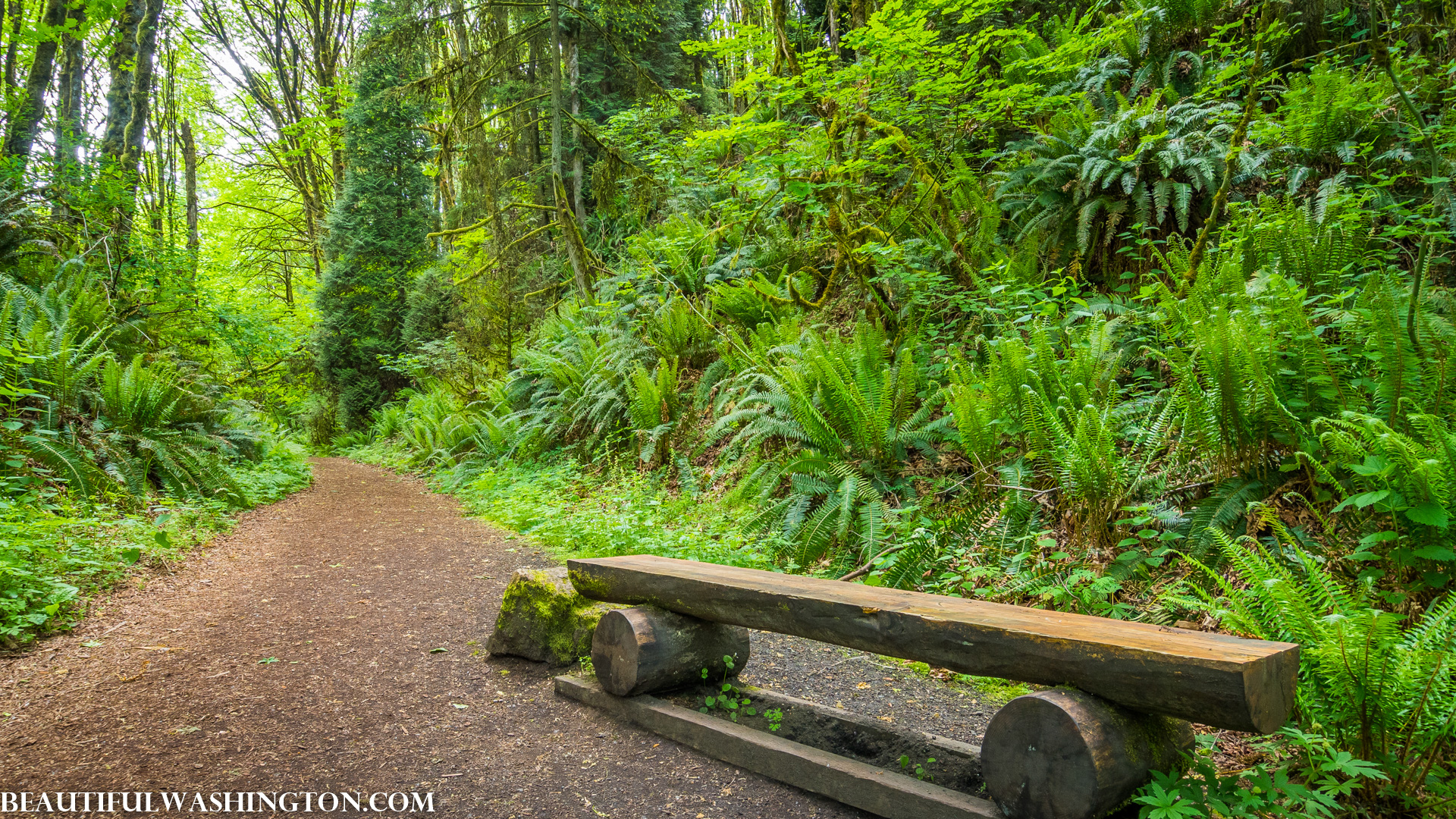
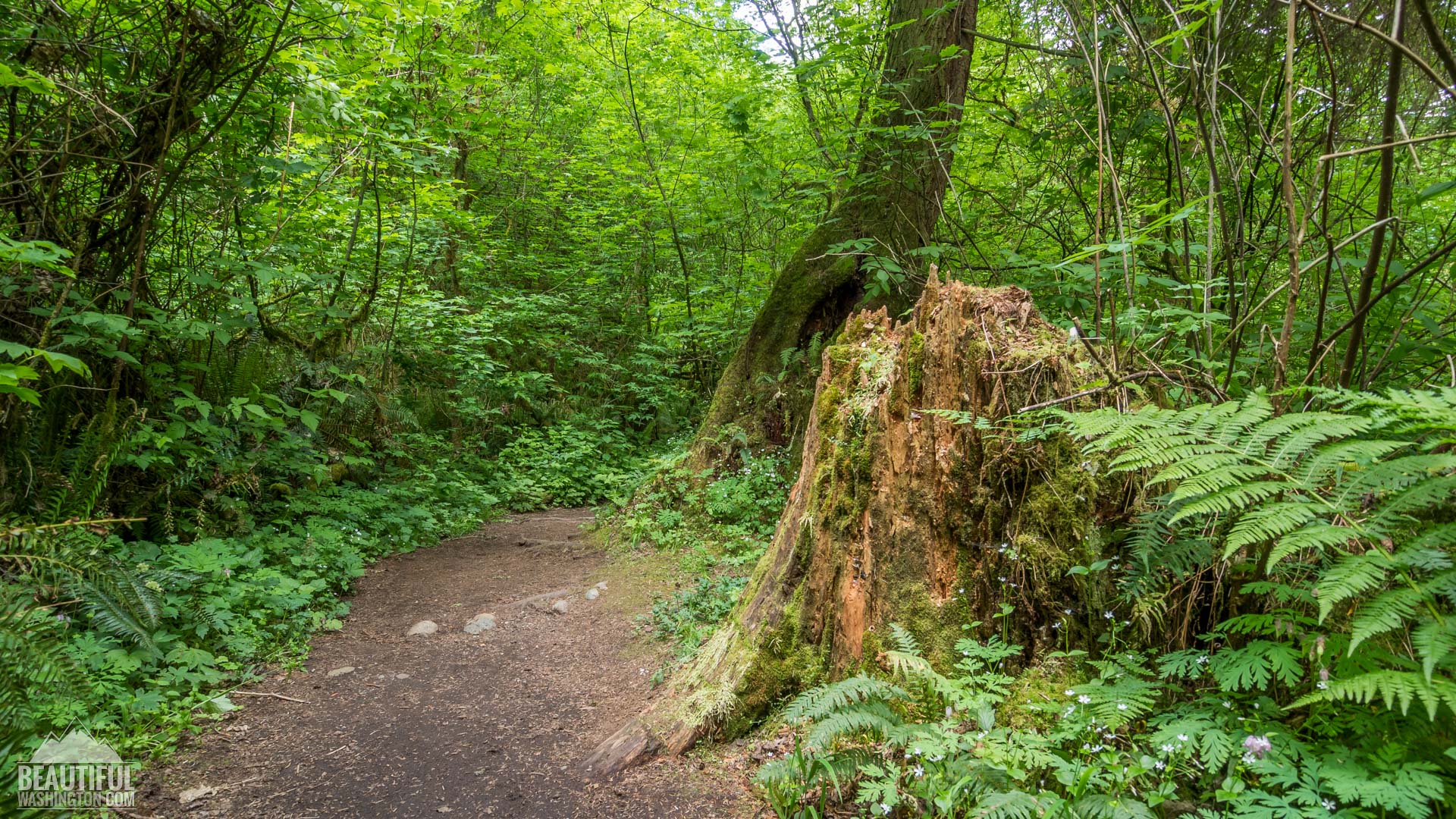
很少有人知道,就在这片湖滨公园的北侧,有一条步道悄悄地向森林深处延伸。它叫 Coal Creek Trail,中文可以译作"煤溪步道"。步道不宽,铺着碎石,两侧是密密的二次生长林——赤桤木、西部红雪松、剑蕨——把天空遮得只剩一条细缝。走进去不过几十步,城市的喧嚣便像被人按下了静音键。
Few visitors notice that just north of this lakeside park, a trail slips quietly into the forest. It's called the Coal Creek Trail. The path is narrow, surfaced with gravel, flanked by dense second-growth forest — red alder, western red cedar, sword fern — closing the sky to a thin ribbon of light. Within a few dozen steps, the city falls silent.
但这条步道真正迷人的地方,不只是它的宁静,而是它脚下那段被时间掩埋的历史。你踩着的每一步,都踩在一条曾经轰鸣过的铁路路基上。
But what makes this trail truly captivating isn't its quiet — it's what lies beneath your feet: a century of buried history. Every step you take is a step along a railroad bed that once thundered with coal trains.
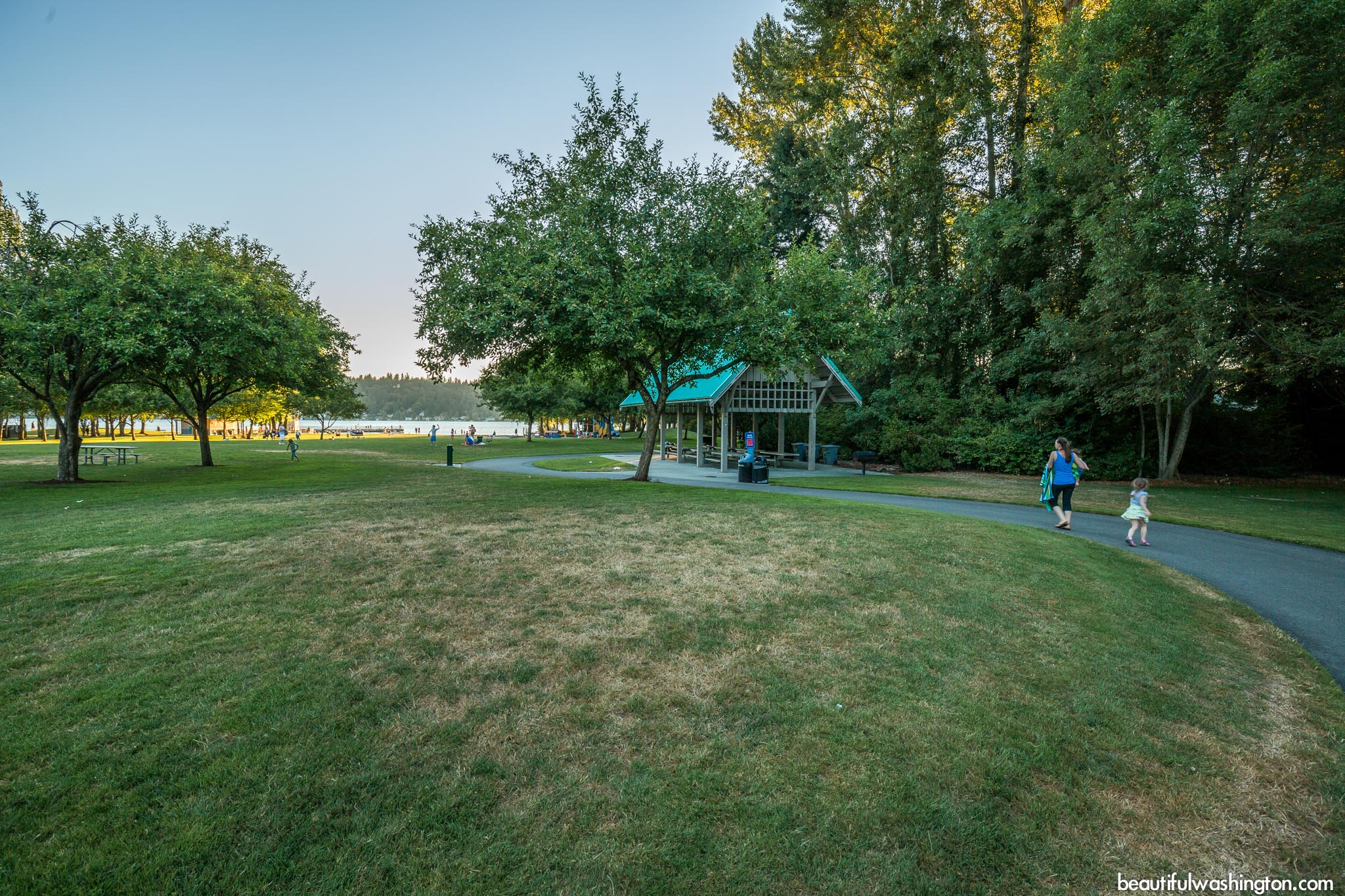
纽卡斯尔海滩公园,华盛顿湖东岸 · Newcastle Beach Park on the eastern shore of Lake Washington
Newcastle Beach Park — a quiet gateway to a century of industrial history
故事要从1864年1月9日说起。
The story begins on January 9, 1864.
那一天,金县测量员埃德温·理查森(Edwin Richardson)与同伴菲利普·刘易斯(Philip H. Lewis)在今天的 Coal Creek 溪畔跋涉,终于有了一个令人振奋的发现。历史学家托马斯·普罗施(Thomas Prosch)后来记录道,这片煤层"比此前发现的任何煤矿都更易于开采和运输",消息一出,立刻引发了一场小型的"煤炭热"。
That day, King County Surveyor Edwin Richardson and his companion Philip H. Lewis were surveying the banks of what is now Coal Creek when they made an electrifying discovery. Historian Thomas Prosch later recorded that this coal was "much more accessible either by land or water" than any previously found in the region — and the news sparked an immediate coal rush.
"这片煤层,比此前发现的任何煤矿都更易于开采和运输。其发现引发了相当大的轰动。"
"This coal was much more accessible either by land or water. Its discovery caused considerable excitement."— Thomas Prosch, A Chronological History of Seattle, 1900–1901
几周之内,理查森和同伴们便在溪边圈下了土地。煤矿开采随即开始,起初零散而粗放,但很快便以指数级的速度扩张。在此后将近一个世纪里,这片山谷共出产了将近一千一百万吨煤炭。
Within weeks, Richardson and his companions had staked their claims. Mining began — at first scattered and crude, but expanding exponentially. Over the next century, this valley would yield nearly eleven million tons of coal.
矿工们来了,他们的家眷来了,小店铺、教堂、学校也来了。一个叫做纽卡斯尔(Newcastle)的小镇,就这样在华盛顿湖东岸的山丘之间生长起来。1883年,这里已经住着750名居民,比邻近的伦顿(Renton)还要热闹。
Miners arrived, then their families, then shops, churches, and schools. A town called Newcastle grew up in the hills east of Lake Washington. By 1883, it held 750 residents — more than the neighboring town of Renton.

19世纪末华盛顿州的煤矿作业场景 · Coal mining operations in late 19th-century Washington State
Coal mining operations in Washington State, late 19th century
煤挖出来了,但怎么运出去,是个大问题。最初,矿工们把煤装进麻袋,用独木舟和驳船渡过华盛顿湖,再经由湖联(Lake Union)转运,最终抵达艾略特湾(Elliott Bay)的码头。这一路上,煤炭要被装卸多达十一次,成本高得惊人。
Getting the coal out was the great challenge. At first, miners bagged it and hauled it by canoe and barge across Lake Washington, then across Lake Union, then to Elliott Bay — a journey requiring eleven separate loading and unloading operations. The cost was staggering.
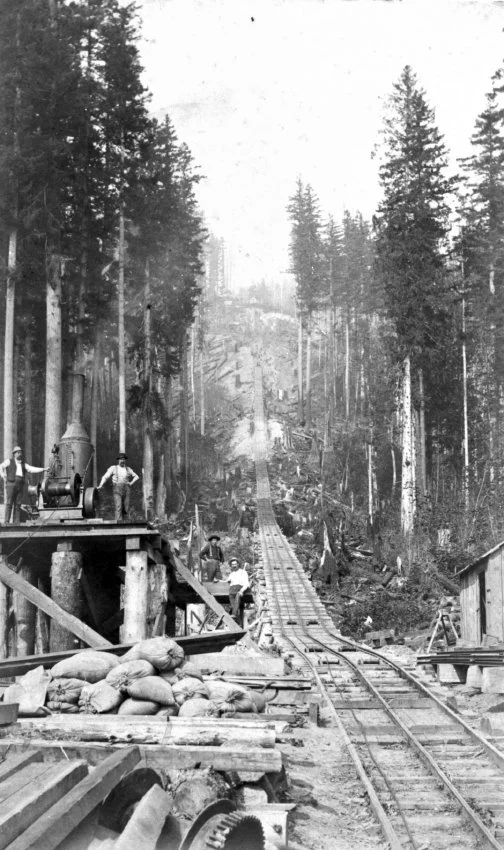
改变在1878年2月到来。西雅图与华拉华拉铁路公司(Seattle and Walla Walla Railroad)完成了一条从伦顿到纽卡斯尔矿区的窄轨铁路,全长约21英里。为了穿越这片沟壑纵横的地形,工程师们建造了整整18座栈桥,最高的一座达到120英尺,最长的延伸超过1,000英尺——其中横跨梅溪(May Creek)的那座,一度被誉为当时全美最大的木结构建筑。
Change arrived in February 1878. The Seattle and Walla Walla Railroad completed a narrow-gauge line from Renton to the Newcastle mines — 21 miles in total. To cross the ravine-cut terrain, engineers built 18 wooden trestles, the tallest reaching 120 feet, the longest stretching over 1,000 feet. The May Creek trestle was hailed at the time as the largest timber structure in the United States.
铁路沿着 Coal Creek 北侧的山腰蜿蜒而行,穿过今天的 Coal Creek Parkway 以东,最终抵达矿区。蒸汽机车喷着白烟,拖着满载煤炭的车厢,轰隆隆地驶向湖边的码头。运输效率一夜之间天翻地覆。
The railroad wound along the north slope of Coal Creek, east of what is now Coal Creek Parkway, all the way to the mines. Steam locomotives hauling loaded coal cars thundered toward the lakeside docks. Transportation efficiency transformed overnight.
1879年,煤矿公司靠卖煤赚了63,000美元,而铁路公司光靠运费就进账122,000美元——这条铁路,比煤矿本身还要赚钱。
In 1879, the coal company earned $63,000 selling coal — while the railroad earned $122,000 in freight fees alone. The railroad was more profitable than the mine itself.— Newcastle (Washington) Historical Society
1878年11月,定期客运服务也开通了。纽卡斯尔不再只是一个封闭的矿工聚居地,它成了一个可以抵达的目的地。人们乘火车来这里打猎、远足。1880年10月,美国总统拉瑟福德·海斯(Rutherford B. Hayes)甚至专程乘火车来此访问——这对一个偏远的煤矿小镇来说,是莫大的荣耀。
By November 1878, regular passenger service had begun. Newcastle was no longer just a closed mining camp — it was a destination. People rode the train to hunt and hike. In October 1880, President Rutherford B. Hayes himself made the journey — an extraordinary honor for a remote coal town.
当然,铁路的日子并非总是顺遂。铁路路基最初是用矿渣(tailings)填平的,而这些矿渣里残留着足够多的煤,足以自燃。煤在地下悄悄燃烧,路基随之下沉,铁轨便会出现起伏。为了维持轨道平整,铁路公司常年雇用两三支养护队,不停地修补。有时候,一周之内某段路基就能下沉一英尺。
Life on the railroad was not always smooth. The roadbed had been built using mine tailings — waste rock that still contained enough coal to combust spontaneously. As coal burned underground, the bed would sink, warping the rails. The railroad kept two or three maintenance crews busy year-round. In a single week, a section of track could drop a full foot.
1880年1月,一场大雪让西雅图陷入瘫痪,铁路服务中断。同年7月,火车晚点了三个小时——原因是撞上了一头猪。猪被拦腰截断,火车倒是毫发无损。这些记录在历史档案里的细节,读来令人忍俊不禁,却也让那个年代的日常生活变得触手可及。
In January 1880, four and a half feet of snow paralyzed Seattle and halted service. That July, the train ran three hours late — because it had struck a hog. The hog was cut in two; the train was undamaged. These details, preserved in historical records, are both amusing and strangely intimate — they make the past feel close.
1897年,铁路从窄轨改建为标准轨,工程浩大。较短的栈桥被拆除,峡谷用矿渣填平,梅溪上又新建了一座更大的桥。改建打断了 Coal Creek 南侧的自然水流,形成了一些临时湿地,每逢大雨便会引发冲刷——这片土地,从那时起便开始以自己的方式,悄悄地消化着人类留下的痕迹。
In 1897, the line was converted from narrow to standard gauge — a massive undertaking. Shorter trestles were demolished, canyons filled with tailings, and a new, larger May Creek trestle was built. The conversion disrupted natural drainage south of Coal Creek, creating temporary wetlands and triggering washouts during heavy rains. From that moment, the land began quietly absorbing the marks humanity had left upon it.
二十世纪初,煤炭的黄金时代开始走向尾声。一战期间,纽卡斯尔的煤矿产量依然维持在高位。但战争结束之后,罢工此起彼伏,设备老化,市场萎缩。大规模采矿在1929年前后停止,零散的独立矿工还在坚持,一直挖到了1960年代。
In the early twentieth century, the golden age of coal began to fade. Production held strong through World War I, but afterward came strikes, aging equipment, and shrinking markets. Large-scale mining ended around 1929; scattered independent miners persisted into the 1960s.
铁路比矿山撑得稍久一些,却也难逃同样的命运。1925年,客运服务停办。1930年,所有铁路运营全面停止。1933年,这条线路被正式宣布废弃。太平洋海岸煤炭公司(Pacific Coast Coal)还抱着一丝希望,等待煤炭市场复苏,直到1937年才下定决心,把所有铁轨一根一根地拆走,建筑物也被拆除或变卖。
The railroad outlasted the mines — but not by much. Passenger service ended in 1925. All rail operations ceased in 1930. The line was officially abandoned in 1933. Pacific Coast Coal held on, hoping the market would recover, until 1937 — when they finally pulled up every last rail and dismantled or sold every building.
曾经在 Lake Boren 湖边游泳的孩子们,向东望去,看到的是满载三十吨煤炭的火车呼啸而过。而今天,同样的目光望去,看到的是 Coal Creek Parkway 上川流不息的汽车。
Children who once swam in Lake Boren would look east and see trains thundering past, carrying thirty tons of coal. Today, that same eastward gaze meets thousands of cars streaming along Coal Creek Parkway.
— Newcastle (Washington) Historical Society
铁轨拆走了,但路基还在。大地有一种顽强的记忆。那些被矿渣填平的峡谷、被夯实的路床、被截弯取直的溪流,在铁路消失之后,并没有立刻被森林吞没。它们以一种微妙的方式保留了下来——地势比周围略高,走向笔直而平缓,与山地的自然起伏格格不入,却又奇异地融入了林间的光影之中。
The rails were gone, but the roadbed remained. The earth has a stubborn memory. The filled canyons, the compacted bed, the redirected streams — none of it vanished when the railroad did. It persisted in subtle ways: a grade slightly higher than the surrounding land, a line straighter and flatter than any natural feature, oddly at home in the dappled forest light.
今天,Coal Creek Trail 南段的大部分路段,就走在这条百年前的铁路路基之上。步道宽阔,铺着碎石,坡度极为平缓——这正是铁路路基的典型特征,因为蒸汽机车无法爬陡坡。两侧的二次生长林已经长得郁郁葱葱,但如果你留心脚下,偶尔还能看到一些异样的土色,或是某块石头的排列方式,隐约透露着这片土地曾经承载过的重量。
Today, most of the southern section of the Coal Creek Trail follows this century-old railroad grade. The path is wide, gravel-surfaced, and remarkably flat — a hallmark of railroad engineering, since steam locomotives couldn't climb steep grades. The second-growth forest has grown thick on either side, but if you watch the ground carefully, you'll notice odd soil colors or unusual stone arrangements that hint at the weight this land once bore.

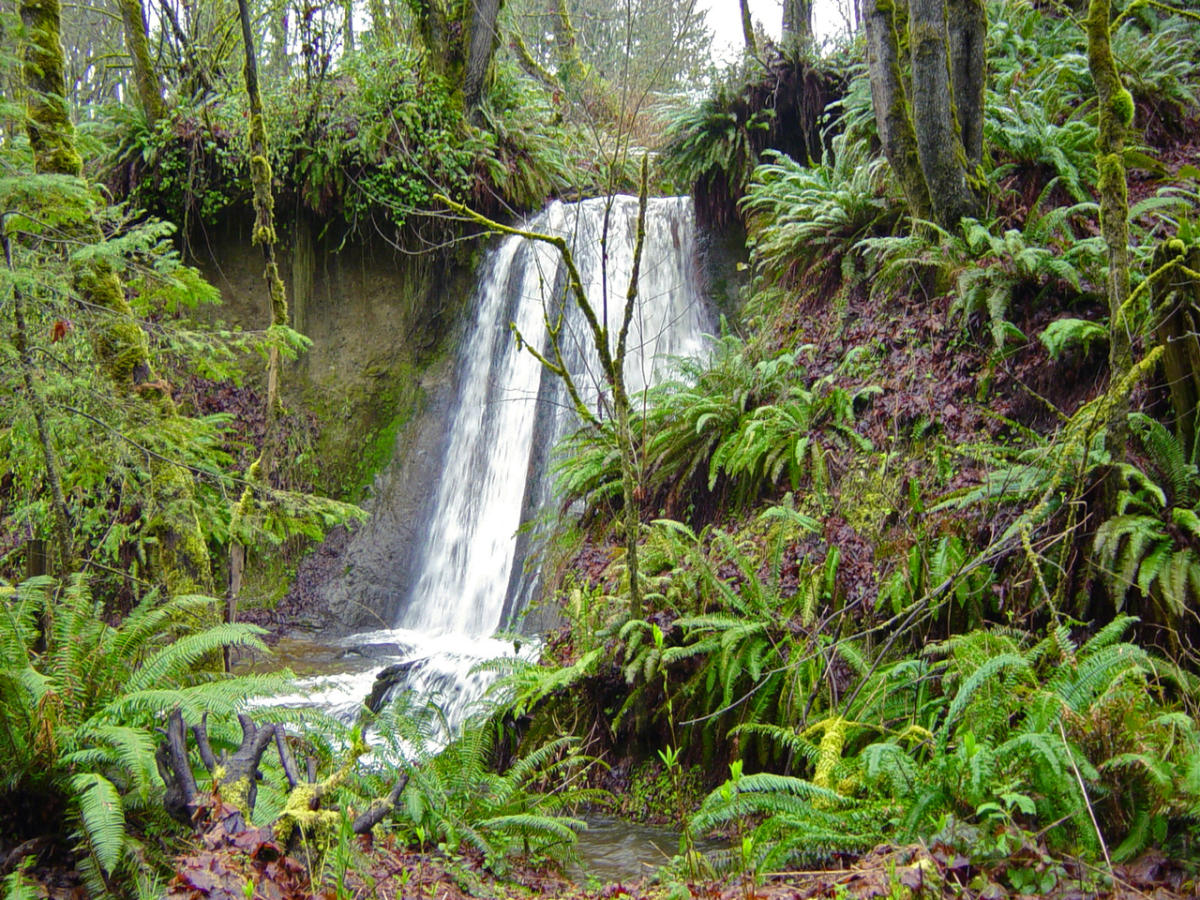
Coal Creek Trail 林间步道与溪边瀑布 · The forested trail and creek-side waterfall
The Coal Creek Trail winds through dense second-growth forest past waterfalls and creek crossings
沿途设有解说牌,讲述着煤矿的历史。在某个转弯处,步道会突然开阔,露出一片低洼的湿地——那正是当年铁路改建时截断水流留下的遗迹,如今已成了蛙鸣和水鸟的家园。步道上还保留着一处机车转盘遗址(locomotive turntable),那是当年让机车掉头的装置,如今只剩一块方形的水泥基座,静静地躺在蕨类植物之间。
Interpretive signs along the way tell the story of the mines. At one bend, the trail opens onto a low wetland — a remnant of the drainage disrupted during the 1897 gauge conversion, now home to frogs and waterfowl. Nearby, a square concrete footing marks the site of a locomotive turntable, the device that once spun engines 180 degrees so they could exit the mines. It lies quietly among the ferns.

Coal Creek Natural Area 全景,步道穿越茂密的二次生长林 · The Coal Creek Natural Area, where the trail follows the old railroad grade
Coal Creek Natural Area — the trail follows the old railroad grade through dense second-growth forest
Coal Creek Trail 在接近 Newcastle Beach Park 的地方,会与另一条步道相遇——Eastrail。
Near Newcastle Beach Park, the Coal Creek Trail meets another trail: the Eastrail.
Eastrail 的前身,是伯灵顿北方圣太菲铁路(Burlington Northern Santa Fe Railway)的货运线路,2007至2008年间停止运营。金县与西雅图港随后以1.07亿美元收购了这条长达42英里的铁路走廊,将其逐步改建为一条多功能步道,向北延伸至伍丁维尔(Woodinville)和斯诺霍米什(Snohomish),向南连接伦顿的基因·库伦纪念海滩公园(Gene Coulon Memorial Beach Park)。
The Eastrail was once a Burlington Northern Santa Fe Railway freight corridor, which ceased operations in 2007–2008. King County and the Port of Seattle purchased the 42-mile corridor for $107 million and have been converting it into a multi-use trail — extending north to Woodinville and Snohomish, south to Gene Coulon Memorial Beach Park in Renton.
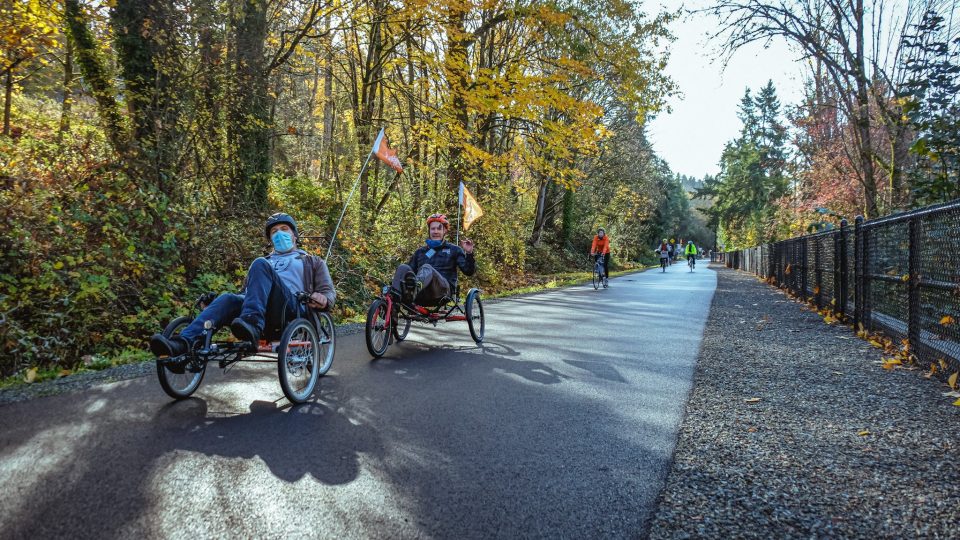
在 Newcastle Beach Park 附近,Eastrail 已经铺设完成,是一条宽阔平整的铺装路面,供步行者、骑行者和轮椅使用者共享。两条步道在这里交汇,像是两个时代的铁路在此握手:一条是煤矿时代的窄轨遗迹,已经被森林和溪流重新接纳;另一条是货运时代的宽轨遗产,正在被城市和社区重新定义。
Near Newcastle Beach Park, the Eastrail is already paved and open — a wide, smooth surface shared by walkers, cyclists, and wheelchair users. Here, two trails meet: one a remnant of the coal-mining era, reclaimed by forest and stream; the other a legacy of the freight era, being reclaimed by city and community. Two railroads from two different centuries, shaking hands at the lake.

Eastrail 多功能步道,由百年铁路走廊改建而来 · The Eastrail, converted from a century-old freight rail corridor
The Eastrail — a former BNSF freight corridor now open to walkers, cyclists, and the community
从 Red Town Trailhead 出发,沿 Coal Creek Trail 一路向北,穿越 Coal Creek Natural Area 的密林,跨过几座木桥,再沿 Eastrail 向南走半英里,便抵达 Newcastle Beach Park。全程约11英里往返,累计爬升约2000英尺——数字听起来不小,但因为起伏分散在漫长的路途中,走起来并不觉得吃力。
Starting from the Red Town Trailhead, follow the Coal Creek Trail north through the dense forest of the Coal Creek Natural Area, cross several wooden bridges, then walk half a mile south on the Eastrail to reach Newcastle Beach Park. The round trip covers about 11 miles with roughly 2,000 feet of elevation gain — substantial on paper, but spread across a long, gradual route that never feels punishing.
Newcastle Beach Park 是一个朴素而宜人的地方。有停车场,有洗手间,有野餐桌,有一片可以下水的湖滩。华盛顿湖在这里格外宽阔,对岸的西雅图远得像一幅水彩画。坐在湖边的长椅上,吃一顿带来的午餐,看湖面上的帆船慢慢漂过,很难想象脚下这片土地曾经是一个工业时代的运输枢纽。
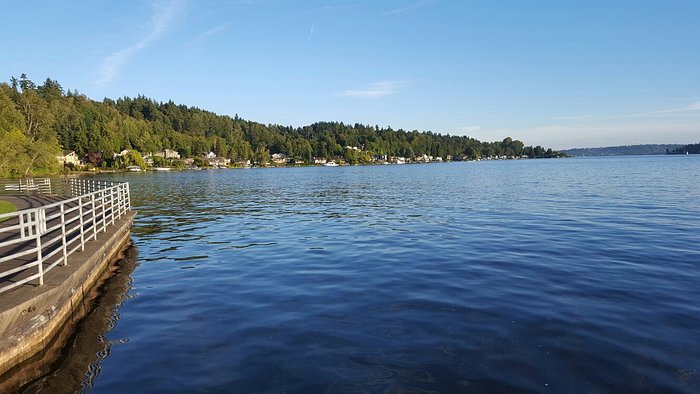
Newcastle Beach Park is simple and welcoming: parking, restrooms, picnic tables, a sandy beach for wading. Lake Washington is wide here, Seattle's skyline a watercolor blur on the far shore. Sitting on a bench with a packed lunch, watching sailboats drift past, it's hard to imagine that this ground was once an industrial transportation hub.

从纽卡斯尔海滩公园望向华盛顿湖,对岸是西雅图 · Looking across Lake Washington toward Seattle from Newcastle Beach Park
The view from Newcastle Beach Park across Lake Washington toward Seattle
但如果你愿意,可以闭上眼睛,想象一下:1880年的某个夏日,一列满载煤炭的火车从山里驶出,沿着今天你走过的路基,轰隆隆地向湖边驶去。蒸汽的白烟在松树梢头散开,车轮与铁轨的摩擦声在山谷里回响。矿工们在矿坑里挥汗如雨,孩子们在 Lake Boren 的湖边嬉戏,向东望去,看见火车一闪而过。
But close your eyes for a moment. Imagine a summer day in 1880: a coal train rolling out of the mountains, thundering along the very grade you just walked, heading for the lake. White steam dissolves in the pine tops. The grind of wheels on iron echoes through the valley. Miners sweat underground; children play at Lake Boren, glancing east to catch a flash of the passing train.
那个世界已经消失了。但它留下的痕迹,以一种安静而持久的方式,藏在这条步道的每一寸路基里,藏在溪边那些解说牌的文字里,藏在林间那些比周围略微平整的地势里。
That world is gone. But its traces remain — quietly, persistently — in every inch of this trail's grade, in the text of the interpretive signs by the creek, in the subtle flatness of the forest floor where the railbed still holds its shape.
有一件事,我每次走这条步道都会想到。当年铁路改建时,工程师们用矿渣填平了 Coal Creek 南侧的峡谷,截断了自然水流。这片土地随即开始以自己的方式反抗:地下水渗出,形成湿地;大雨冲刷,造成塌方;植物的根系悄悄地松动着填充物,把人类的工程一点一点地消化。
There is something I think about every time I walk this trail. When the railroad was converted in 1897, engineers filled the canyons south of Coal Creek with mine tailings, cutting off the natural drainage. The land pushed back in its own way: groundwater seeped up, forming wetlands; heavy rains caused washouts; plant roots quietly loosened the fill, digesting the human engineering piece by piece.
一百多年过去了,那些湿地如今是蛙类和水鸟的栖息地,那些曾经的冲刷痕迹已经被苔藓和蕨类覆盖。Coal Creek 依然在流,只是走了一条与当年略有不同的路线。森林在铁路废弃之后重新生长,如今已经郁郁葱葱,遮天蔽日。
More than a century later, those wetlands are home to frogs and waterfowl. The old washout scars are blanketed in moss and fern. Coal Creek still flows — just along a slightly different course than before. The forest that regrew after the railroad's abandonment now stands dense and canopy-high.
土地是有耐心的。它不急着抹去人类留下的痕迹,也不急着恢复到某种"原始"的状态。它只是慢慢地、持续地生长,把一切都纳入自己的节奏里。铁路路基变成了步道,矿渣堆变成了土丘,截断的水流找到了新的出口。
The land is patient. It doesn't rush to erase what humans left behind, nor to restore itself to some imagined original state. It simply grows — slowly, continuously — absorbing everything into its own rhythm. The railroad grade becomes a trail. The tailings heap becomes a gentle rise. The severed stream finds a new way to the lake.
铁轨尽头,步道延伸。这大概是这片土地能给出的,最好的答案。
Where rails end, trails begin. Perhaps that is the best answer this land can offer.
下次如果你来 Newcastle Beach Park,不妨在停好车之后,先不急着去湖边。沿着停车场北侧的小路走出去,找到 Eastrail,向北走半英里,在 Coal Creek Parkway 的路口转入林间步道。走进去,让眼睛适应树荫下的光线,让耳朵听一听溪水的声音。然后低头看看脚下这条宽阔而平缓的碎石路。
Next time you visit Newcastle Beach Park, don't rush straight to the lake. Walk north from the parking lot, find the Eastrail, follow it half a mile, then turn into the forest at Coal Creek Parkway. Let your eyes adjust to the shade. Listen to the creek. Then look down at the wide, flat gravel path beneath your feet.
它曾经是一条铁路。一条运煤的铁路,一条连接山里与湖边的铁路,一条让一个小镇得以存在、又随着小镇一起沉默的铁路。现在,它是你脚下的步道。
It was once a railroad. A coal railroad. A railroad that connected the mountains to the lake, that made a town possible, and that fell silent when the town did. Now it is the trail beneath your feet.
📚 参考来源 · Verified Sources
📚 Verified Sources