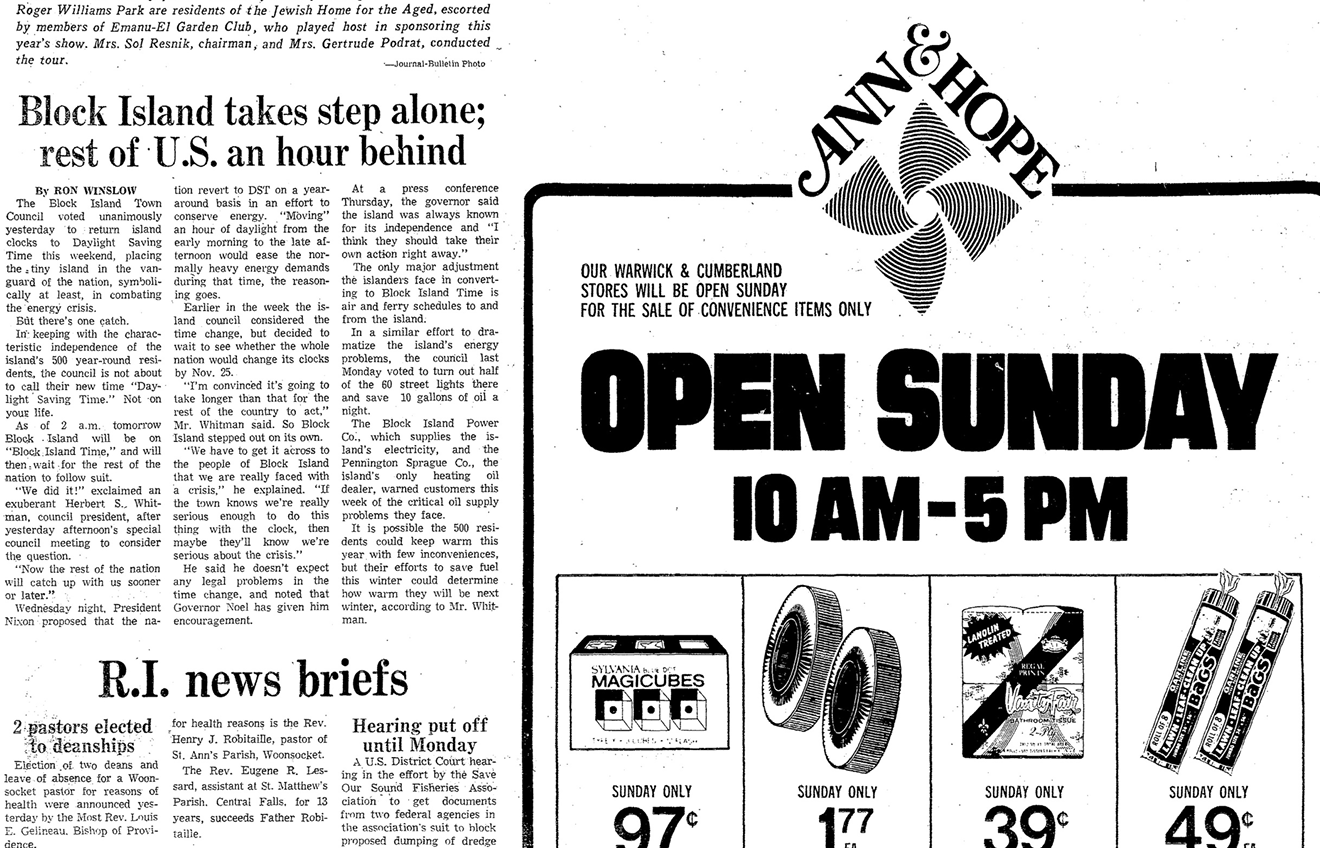
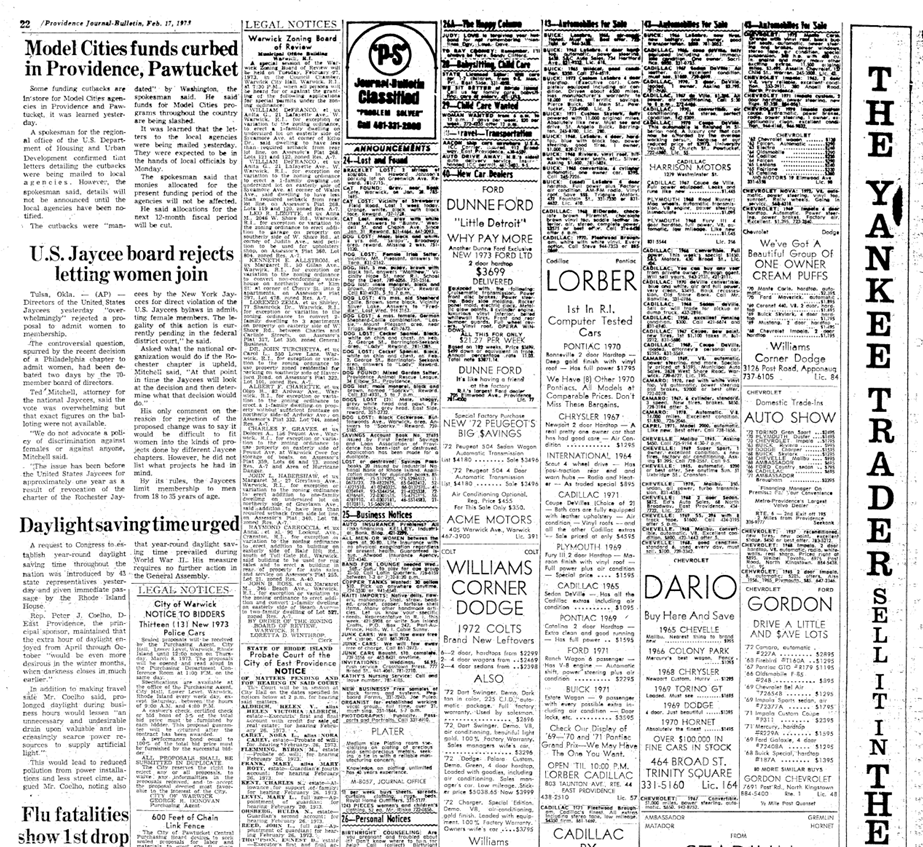
January 7, 1974
First Workday: Sunrise at 8:27 a.m. in Washington
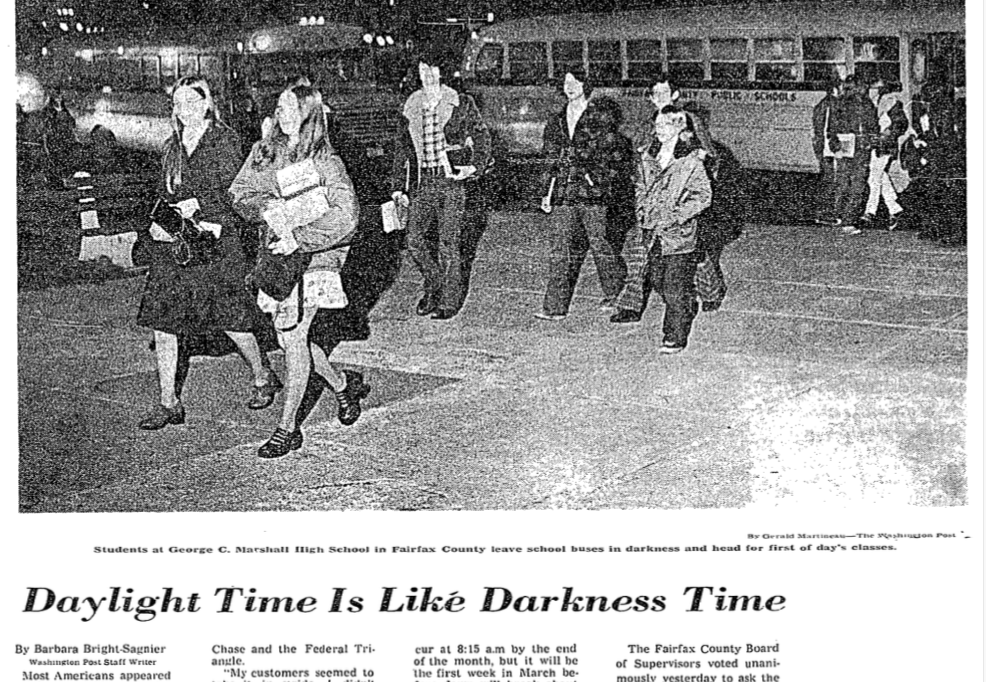
The Washington Post, January 7, 1974 — front-page coverage of the first day of permanent daylight saving time, including accounts of suburban parents describing children leaving for school in pitch darkness with flashlights.
Source: Washingtonian (via Washington Post archives)
On the first workday after permanent daylight saving time took effect, sunrise in Washington, D.C. came at 8:27 a.m. Children headed out into the dark.
"It was jet black outside when my daughter was supposed to leave for school. Some of the children took flashlights with them."
— Florence Bauer, Springfield, Virginia, speaking to The Washington Post, January 7, 1974 [5]
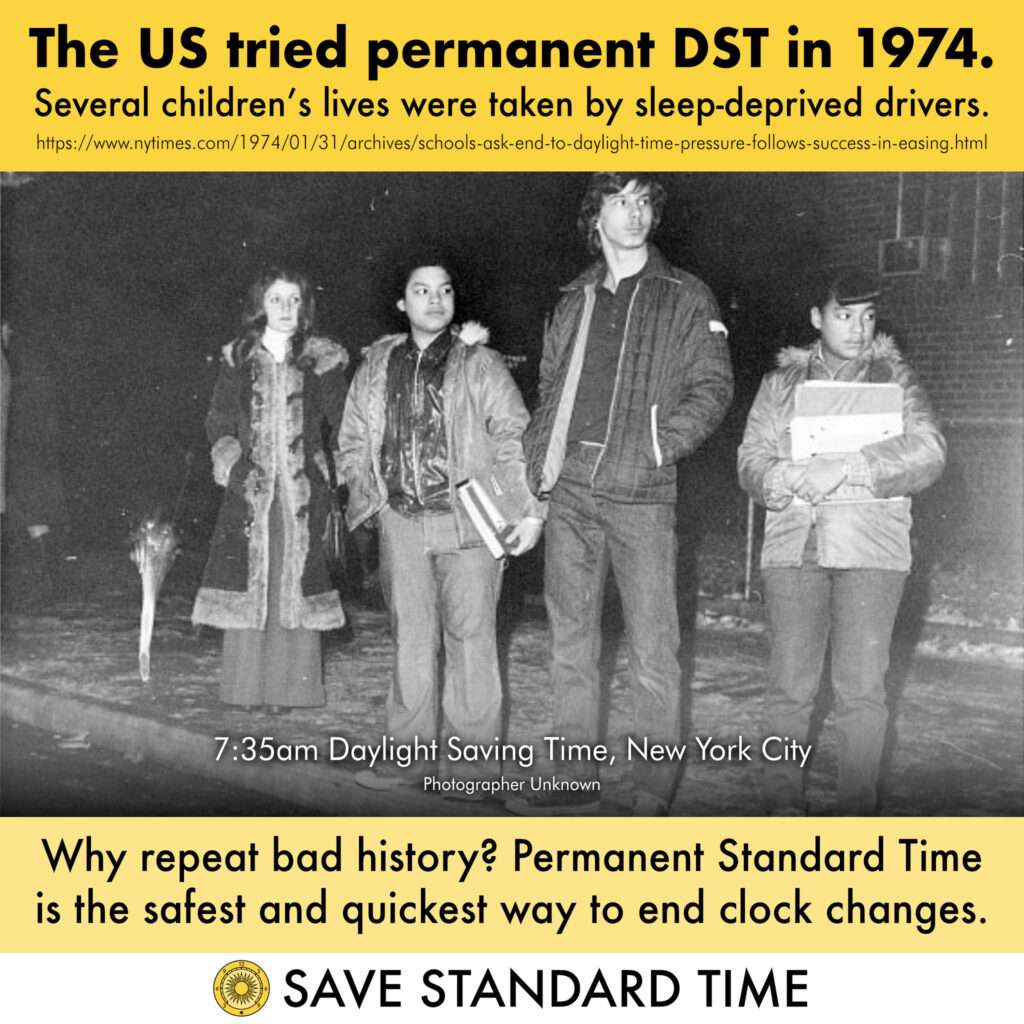
Children waiting for school in darkness during the 1974 permanent daylight saving time experiment.
Source: Growing By Degrees (via historical archives)
Across the Eastern United States, winter sunrises had been pushed to 8 a.m. or later; in parts of the North, sunrise crept past 9:30 a.m. Within days of the law taking effect, accidents began to pile up:
- 📍 Alexandria, Virginia — January 7: a 6-year-old girl struck by a car on her way to school, leg broken
- 📍 Prince George's County, Maryland — February: two students injured walking to school in the dark
- 📍 Florida — within the first two weeks: 8 children killed on their way to school (vs. 2 the previous year) [6]
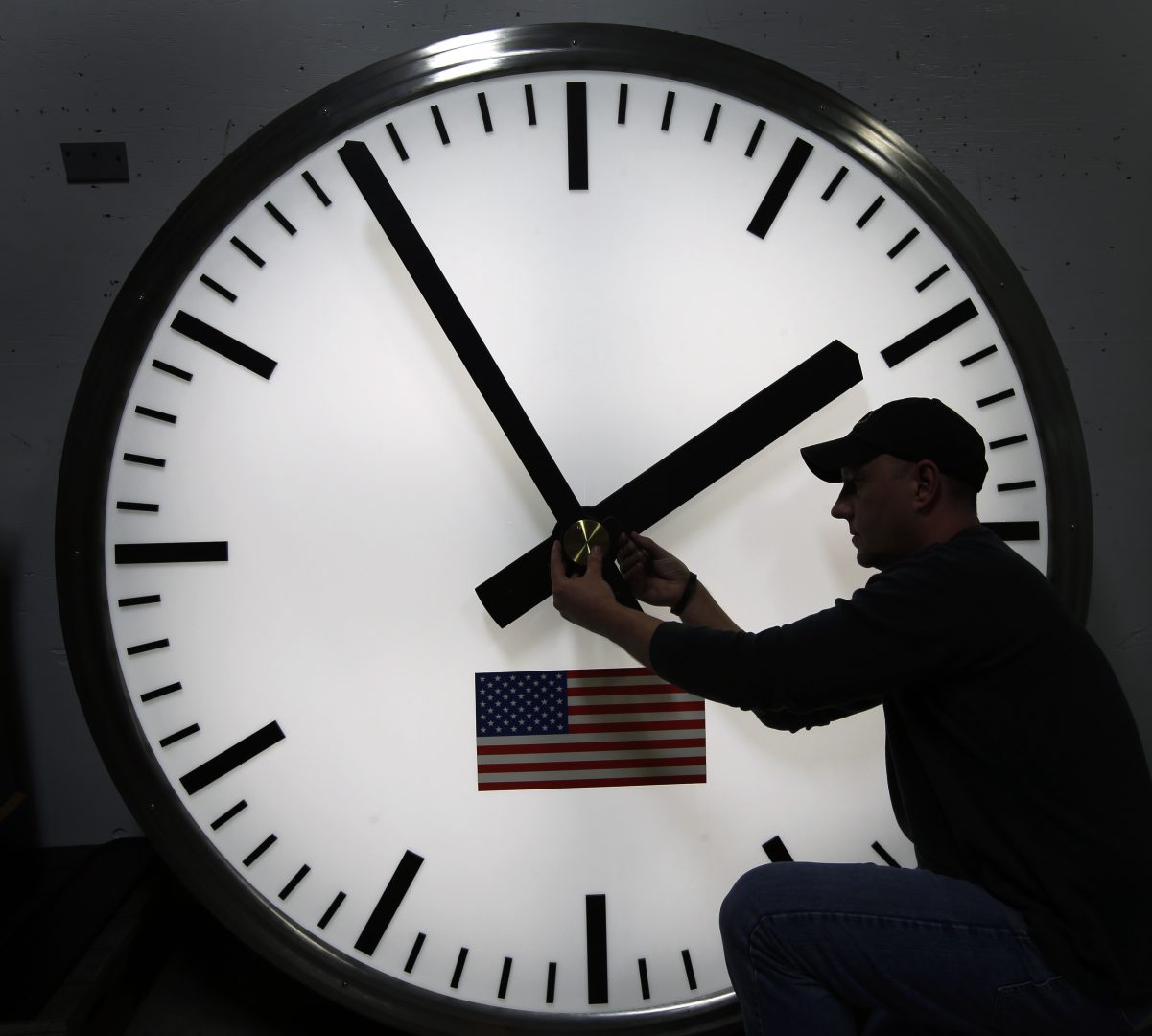
Associated Press archive photograph documenting the 1974 permanent daylight saving time experiment.
Source: WITF Public Media (via AP archives)
DST expert and author of Seize the Daylight, David Prerau, noted that in Florida, eight children were killed on their way to school in the first two weeks of winter daylight saving time — compared with two the previous year — and "it became a big issue."[6] Florida's Commissioner of Education, Floyd T. Christian, submitted a memorandum to the State Board of Education on January 28, 1974, documenting how school districts had responded: 55 districts pushed back start times by 30 minutes to an hour, while 12 made no adjustments.[7]
"It's time to recognize that we may well have made a mistake."
— Senator Dick Clark of Iowa, congressional speech, January 28, 1974